
2026 Annual Symposium
Stanford Photonics Research Center
Co-organized withNTT Research

September 14 to 16, 2026 · Stanford University

2026 SPRC Annual Symposium

Uniting leaders, scientists, and innovators across industry, academia, and government to drive collaborative breakthroughs in photonics

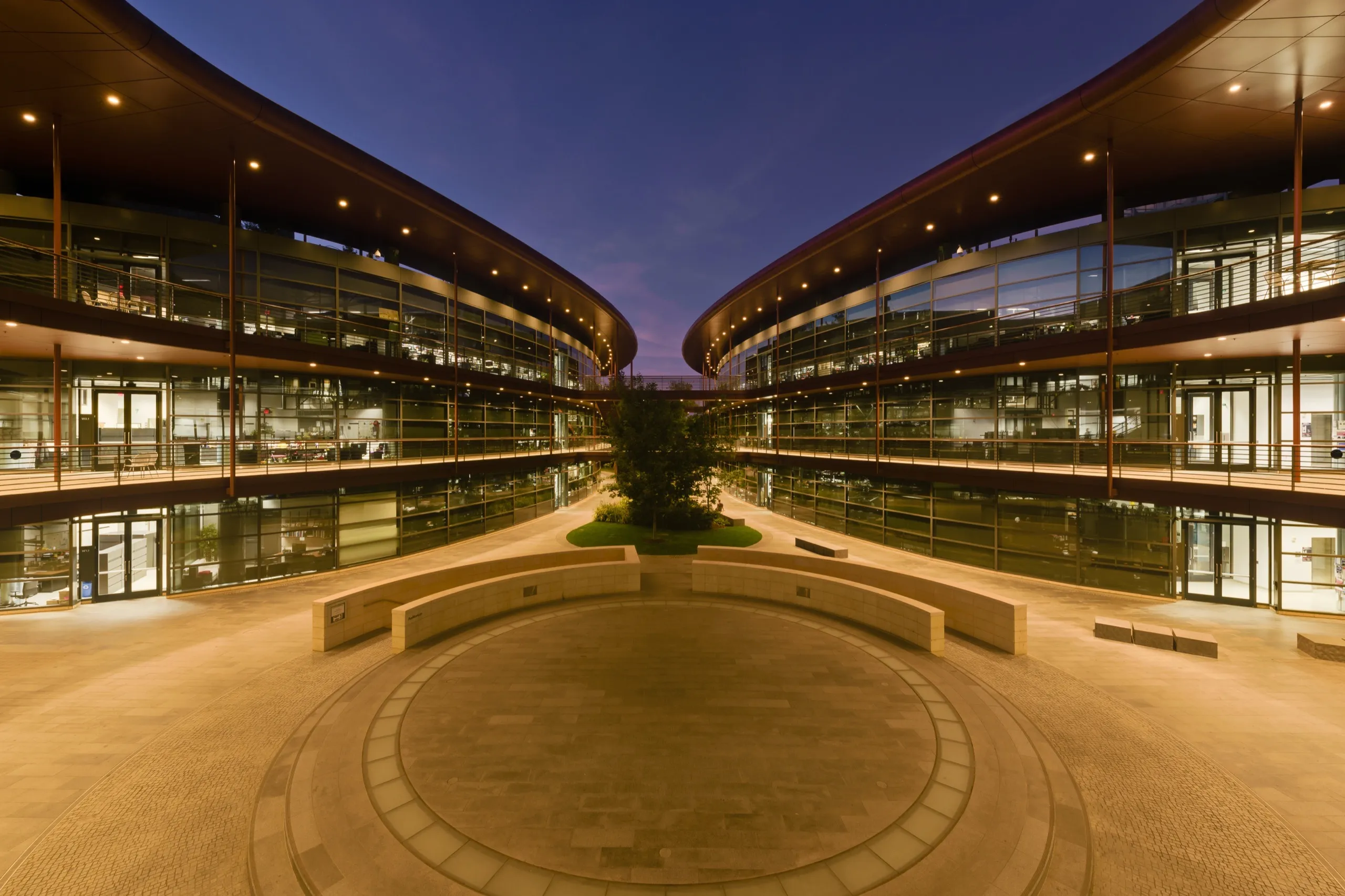
James H. Clark Center, Stanford University. Photo by King of Hearts, CC BY-SA 4.0, resized, cropped, and darkened.

About the Symposium

The 2026 SPRC Annual Symposium is the marquee event for the Stanford photonics community and brings together leaders from academia, industry, and government to explore the future of photonics.

Unlike a conventional technical conference, the Symposium is designed as a forum for high-level exchange and cross-community collaboration. Talks are conversation starters rather than detailed lectures, with the emphasis on strategic insight and shared challenges.

Participation is curated to foster substantive dialogue and collaboration. Attendees can expect perspectives spanning the full photonics ecosystem, including academic researchers, government labs, startups, and global technology companies.

Guiding Themes

The program is organized around two questions.

New Opportunities

What novel applications and solutions are enabled by recent advances in photonics, from biophotonics and optical interconnects to copackaged optics, quantum systems, and metamaterials?

Key Challenges

What technical or organizational barriers, if solved, would unlock transformative new applications and accelerate adoption?

Program

Three days of keynotes, technical sessions, discussions, and community events.

Monday

September 14

  1. Doors open

  2. Keynote

    Keynote & Welcome

    • Steven Chu

      The role of AI in meeting the challenges of getting to net-zero GHG emissions

    • Armand Niederberger

      Welcome and Monday overview

  3. Coffee discussion

  4. Session 1: Future of computing

    • Pete Shadbolt

      Progress towards large-scale fault-tolerant quantum computing with photons

    • Hiroki Takesue

      Beyond photonic acceleration: Computing with gain-driven dynamics

    • Sunil Pai

      Revisiting prospects of photonic computing in the AI era

    • Timothée Leleu

      AI-Assisted Discovery for Hardware–Software Co-Design Across the Computational Stack

  5. Lunch at Greenfish@NeXus

  6. Session 2: Datacenter communication

    • Andreas Bechtolsheim

      Optics for AI infrastructure

    • Joseph M. Kahn

      Near-Ideal Coherent Detection Without a Local Oscillator

    • LK Bhupathi

      Reliability-first Optical Links for AI Clusters

    • Gaurang Choksi

      May the Fiber Be With (and Without) You! – An Industry Perspective on Assembly & Testing for Co-Packaged Optics

  7. Coffee discussion

  8. Session 3: Copackaged optics

    • Phil Winterbottom

      The Next Beachfront Might be Optical

    • Ameet Bhansali

      An Opto-Electronic Heterogeneous Integration Platform to address AI Hardware Challenges

    • Zoran Jandric

      Heat Assisted Magnetic Recording (HAMR) Journey

    • Giovanni Scuri

      Electro-Optic Materials and Photonic Inverse Design for Scalable Optical Systems (TBC)

Computing, data centers, and co-packaged optics.
Tuesday

September 15

  1. Doors open

  2. Keynote

    Keynote & Welcome

    • Haisheng Rong

      Demystifying the Light Source in Co-Packaged Optics

    • Armand Niederberger

      Welcome and Tuesday overview

  3. Coffee discussion

  4. Session 1: Materials

    • Matthew J. Dejneka

      Glass for Photonics

    • Mark Brongersma

      Metasurface-based optoelectronics devices

    • Matthias F. Kling

      AI for the Future of Electronics at the Quantum Limit

    • Shanhui Fan

      Radiative Cooling

  5. Lunch at Greenfish@NeXus

  6. Session 2: Systems

    • Ronald Goossens

      A brief history of photolithography and the longevity of Moore’s Law

    • Jonathan Fan

      Meta-Refractives: Curved and Freeform Metaoptics by Inverse Design

    • Bijoy Krishna Das

      3D Programmable Photonic Integrated Circuits

    • John Wood

      Fusing Photonics and AI for the Maritime Domain

  7. Coffee discussion

  8. Open Session: Entrepreneurship & innovation

    • Homan Yuen, Jorn Smeets, Roozbeh Parsa, Hidenobu Nagata

      VC Panel: Funding breakthroughs

    • Startup Pitches

  9. Poster session

  10. Conference dinner

    • Jungsang Kim

      Ginzton Labs in 1990s: Photonics at Stanford

Materials, systems, and entrepreneurship.

Wednesday

September 16

  1. Doors open

  2. Keynote

    Keynote & Welcome

    • Yasaman Soudagar

      The Breakthrough Is Just the Beginning: Lessons from Taking Photonics from Lab to Market

    • Armand Niederberger

      Welcome and Wednesday overview

  3. Coffee discussion

  4. Session 1: Life Sciences

    • Camille Pataki

      Leveraging single molecule tracking for drug discovery

    • Michelle Kueppers

      Label-free live-cell imaging: Interferometric Image Scanning Microscopy provides 120 nm lateral resolution inside live cells

    • Jennifer Dionne

      Metasurface-Enhanced Raman Spectroscopy for Molecular Sequencing and Single-Cell Phenotyping

    • Daniel Palanker

      Prosthetic vision with a photovoltaic substitute for the lost photoreceptors

  5. Lunch at Greenfish@NeXus

  6. Session 2: Sensing

    • Ruslan Belikov

      How Advances in Photonics Can Enable Us to Find Life Beyond the Solar System

    • Charles Santori

      Development of a Scanning Interferometer for Imaging Stars

    • Amir Safavi-Naeini

      Nonclassical Light on a Chip: New Tools for Sensing, and Knowing When Quantum Helps

    • Joonhee Choi

      Quantum sensing with atoms and atom-like systems

  7. Coffee discussion

  8. Session 3: Future of Photonics

    • Dominik Schulten

      Wide & Slow Optical Interconnects for Optical Scale-Up

    • Olav Solgaard

      Free-space Reconfigurable Optical Interconnects

    • Joaquin Matres

      GDSFactory: Python-Driven Design Automation for Photonic and Analog Chips

    • Waguih S. Ishak

      The Photonics Tera Era: A 30-Year Journey from Terabits to the Peta Society

  9. Wrap-up and close

Life science, sensing, and the future of photonics.

Symposium handbook

Complete program and event information.

Download handbook (PDF)

Location

James H. Clark Center

Clark Center Auditorium, below the courtyard

318 Campus Dr
Stanford, CA 94305
Get directions

Speakers

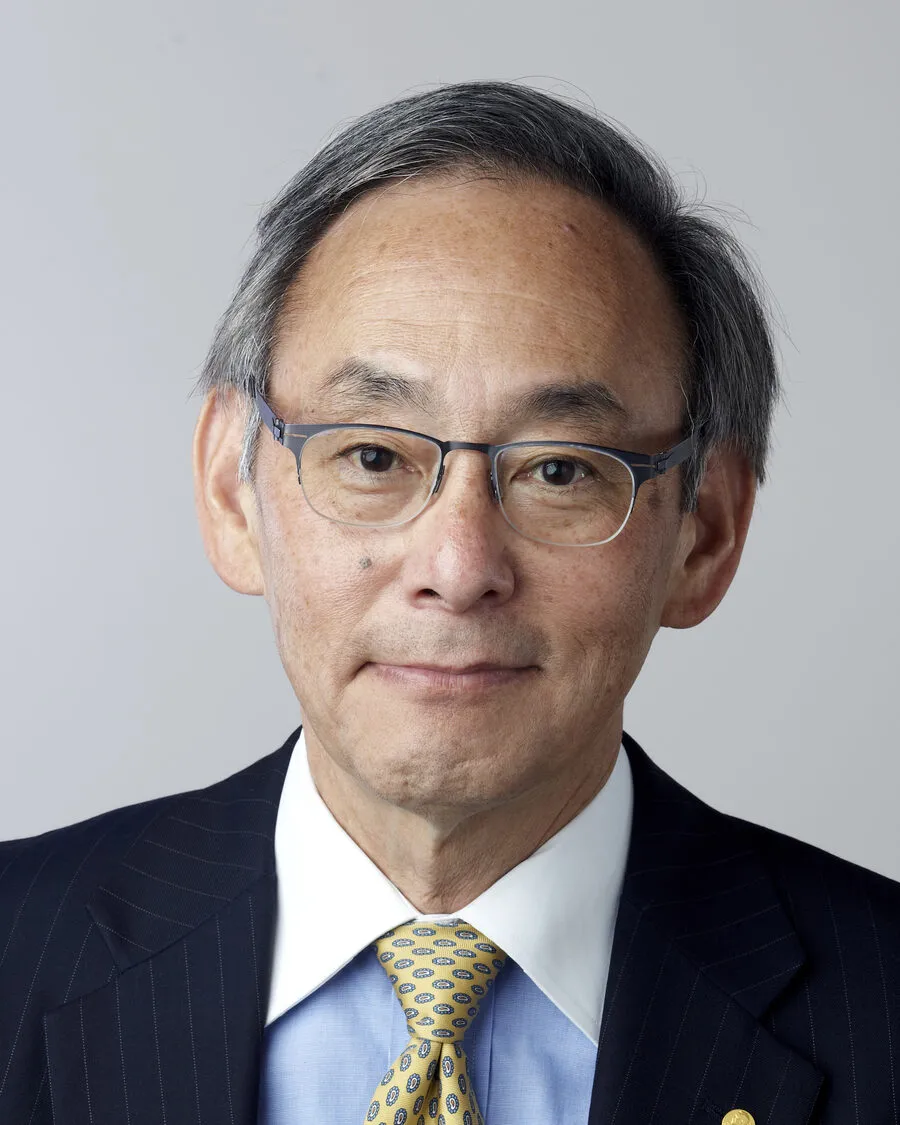
Portrait of Steven Chu

Opening keynote

Steven Chu

Nobel Prize in Physics 1997 · Former U.S. Secretary of Energy

Stanford University

Monday, September 14

Portrait: photograph by Royal Society, CC BY-SA 4.0, cropped and resized.

Industry, Government & Academia

  • Andreas Bechtolsheim

    Arista Networks

  • Ruslan Belikov

    NASA Ames Research Center

  • Ameet Bhansali

    Applied Materials

  • LK Bhupathi

    Credo

  • Gaurang Choksi

    University of Arizona

  • Bijoy Krishna Das

    IIT Madras

  • Matthew J. Dejneka

    Corning Research & Development Corporation

  • Ronald Goossens

    ASML / Purdue University

  • Waguih S. Ishak

    Mojo Vision

  • Zoran Jandric

    Seagate Technology

  • Jungsang Kim

    Duke University

  • Timothée Leleu

    NTT Research / Stanford University

  • Joaquin Matres

    GDSFactory

  • Sunil Pai

    PsiQuantum

  • Roozbeh Parsa

    imec.ventures

  • Camille Pataki

    Eikon Therapeutics

  • Haisheng Rong

    AMD

  • Charles Santori

    Fringe Labs Research

  • Dominik Schulten

    ams OSRAM

  • Pete Shadbolt

    PsiQuantum

  • Jorn Smeets

    PhotonDelta

  • Yasaman Soudagar

    Stealth-mode photonics startup

  • Hiroki Takesue

    NTT Basic Research Laboratories

  • Phil Winterbottom

    Marvell

  • John Wood

    Naval Information Warfare Center Pacific, U.S. Navy

  • Homan Yuen

    Keymaker

Stanford Speakers

  • Mark Brongersma

  • Joonhee Choi

  • Jennifer Dionne

  • Shanhui Fan

  • Jonathan Fan

  • Joseph M. Kahn

  • Matthias Kling

  • Michelle Kueppers

  • Daniel Palanker

  • Amir Safavi-Naeini

  • Giovanni Scuri

  • Olav Solgaard

September 14–16 · Stanford University

Registration is open

Reserve your place at the 2026 SPRC Annual Symposium through Eventbrite.

Checkout not loading? Register on Eventbrite.

Co-organizer

About NTT Research

NTT Research

NTT Research invents the future of optical computing, next generation cryptography, the biodigital twins to enable precision medicine, and the physics of AI to understand how AI works.

NTT Research is the Silicon Valley-based research organization of NTT, a $90+ billion global technology and business solutions leader, serving the Fortune Global 100 and investing 30% of its profits into research and development. NTT Research operates four research groups at its facilities in Sunnyvale, California: the Physics and Informatics (PHI) Lab, the Cryptography and Information Security (CIS) Lab, the Medical and Health Informatics (MEI) Lab, and the Physics of Artificial Intelligence (PAI) Group. NTT Research brings together scientists from leading academic and industry institutions to advance knowledge that shapes the future of technology.

Established to tackle challenges too complex, ambitious, and important for conventional R&D, NTT Research builds on 1,600+ patents and technologies that shaped the modern world. Its inventions will define the next era of human progress.

Partners and Sponsors

  • Catalight Capital
  • Corning
  • Credo
  • Hamamatsu
  • Seagate
  • Jenoptik
  • PhotonDelta
  • Keymaker
  • DP2Ventures
  • EyeKick
  • Matter42
  • GDS Factory
  • imec.ventures
  • Besxar
  • Lucintis
  • Sinova Technologies
  • Amplify
  • Ely
  • Optaric
  • Pumpkinseed

Media Partner

  • EE Times

Stanford Partners

  • Ginzton Lab
  • GLAM
  • SystemX
  • Q-Farm
  • PULSE
  • Bio-X
  • Gordian Knot Center